Our business. Our home.
Over one million acres of contrast and unpredictability, run as a working cattle station and a protected as a wildlife corridor.
01 / A diversified business
It is all about
balance.
As a diversified business, Curtin Springs has strong and unbreakable ties to the land we are responsible for. It is our business and our home.
To be able to run a diversified business, it is all about balance, and balance has a number of meanings for us. We must:
- Protect the diversity, strength, resilience and productivity of our landscape.
- Continually improve the health and potential of the animals we use to convert grass into food protein.
- Build the personal strength to deal with variability in the weather, the markets, and the demands of business and family.
- Develop a business robustness and the ability to endure challenges that can be unpredictable, and the possibilities that need to be uncovered.
A ten-year horizon
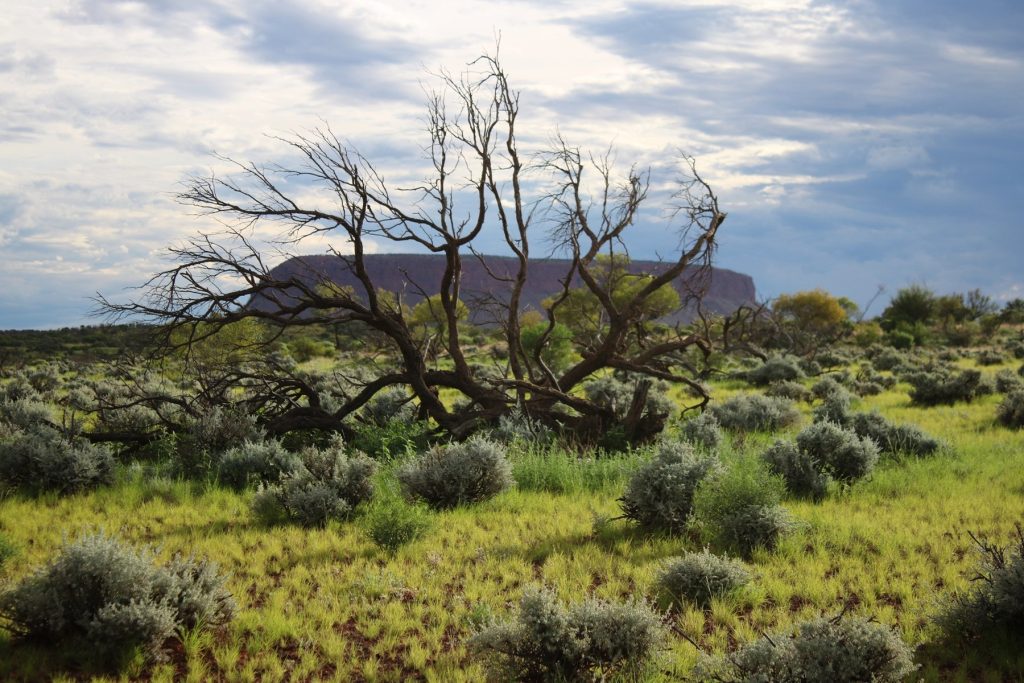
Our thinking is always that the last rain in the rain gauge is the last rain for a decade.
02 / Every drop of water
We muster
with water.
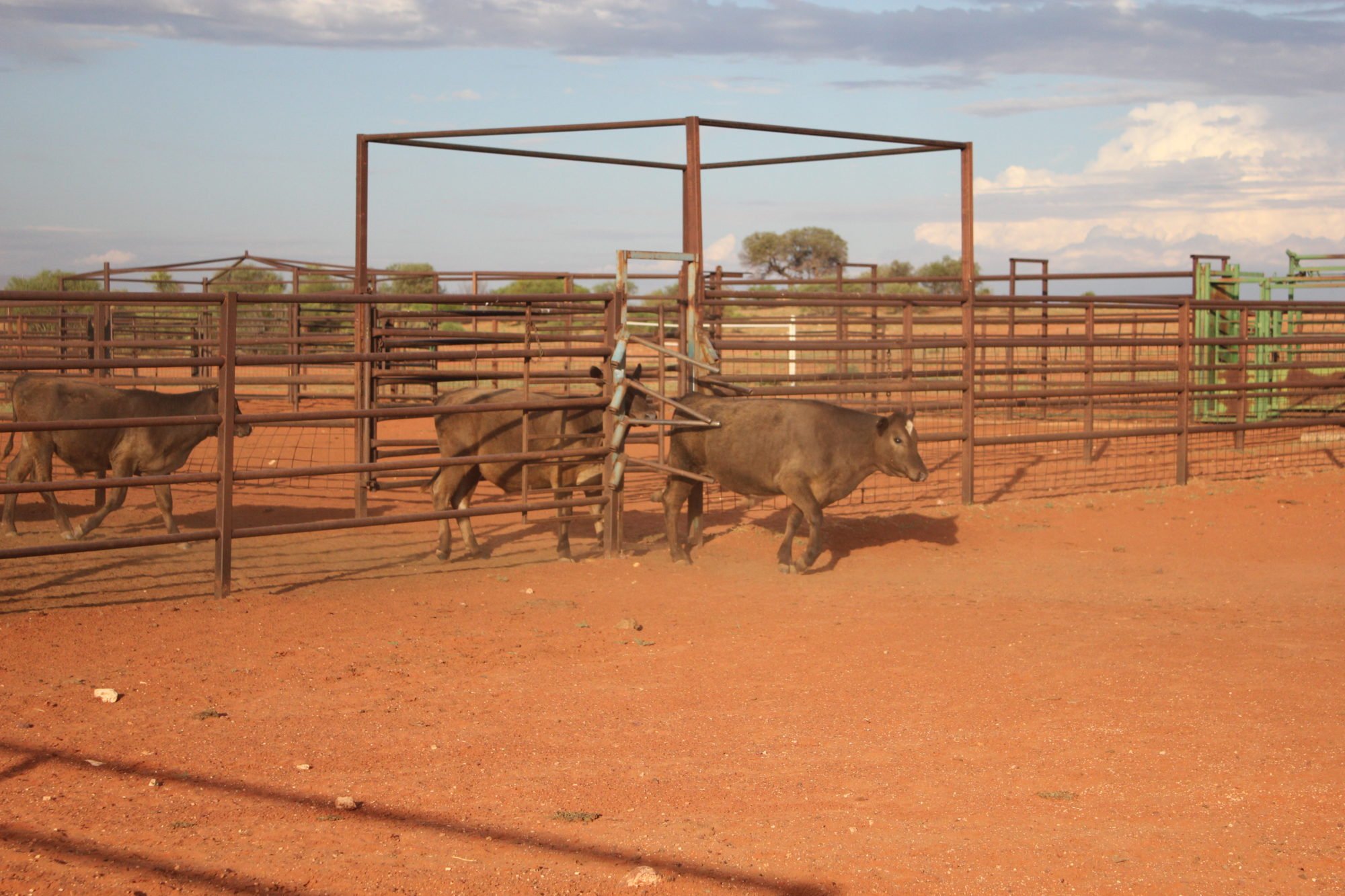
We have no surface water. Water is pumped to the surface, stored in tanks and provided to animals by way of troughs.
We now use the water to muster, called water trapping, with all water available to stock located inside the cattle yards. A one-way set of traps allows the cattle to freely enter and leave the yards, unless we wish to muster. We no longer need horses or choppers to muster.
This reduces our staff needs. The vast majority of the work on the station is maintenance and asset development, not simply chasing cows, and it allows us, as a family business, to be fully involved.
03 / A land of contrast
A million-acre
wildlife corridor.
Curtin Springs Station is over 1 million acres in size and there is a huge diversity in our landscape. There are 7 major land types and 22 sub types, each producing a different combination of grasses, shrubs and trees.
We have a 7–10 year rain cycle, with a good season every 7–10 years. We define a good season as all of the possible plant varieties, on all the different land types, producing a seed. So all our planning has to be on a 10-year horizon.
We rely solely on native grasses and vegetation; there is no improved pasture on the entire million acres, except the planted lawn at the homestead! The benefit of native grasses is that they retain their goodness, even when they are completely dried off.
Station at a glance.
| Area | 1,028,960 acres (416,410 hectares) |
|---|---|
| Size | 1,608 square miles · 4,164 km² |
| Dimensions | About 100km long × 40km wide |
| Land types | 7 major types, 22 sub types |
| Accreditation | EU and Pasture Fed |
How we care for the land.
- We strongly believe that production is intrinsically linked to protection of the land.
- The land must be able to pay for itself. We enable it to do this by producing food.
- Good land management is ongoing, and more complex than locking land up and not using it.
- Weeds and feral animals are dealt with immediately, and stock rates are kept at a level that is responsible to the land and to the animal.
- We use fire conservatively, and vehicle access is restricted and kept away from sensitive areas.
04 / The herd
British breed.
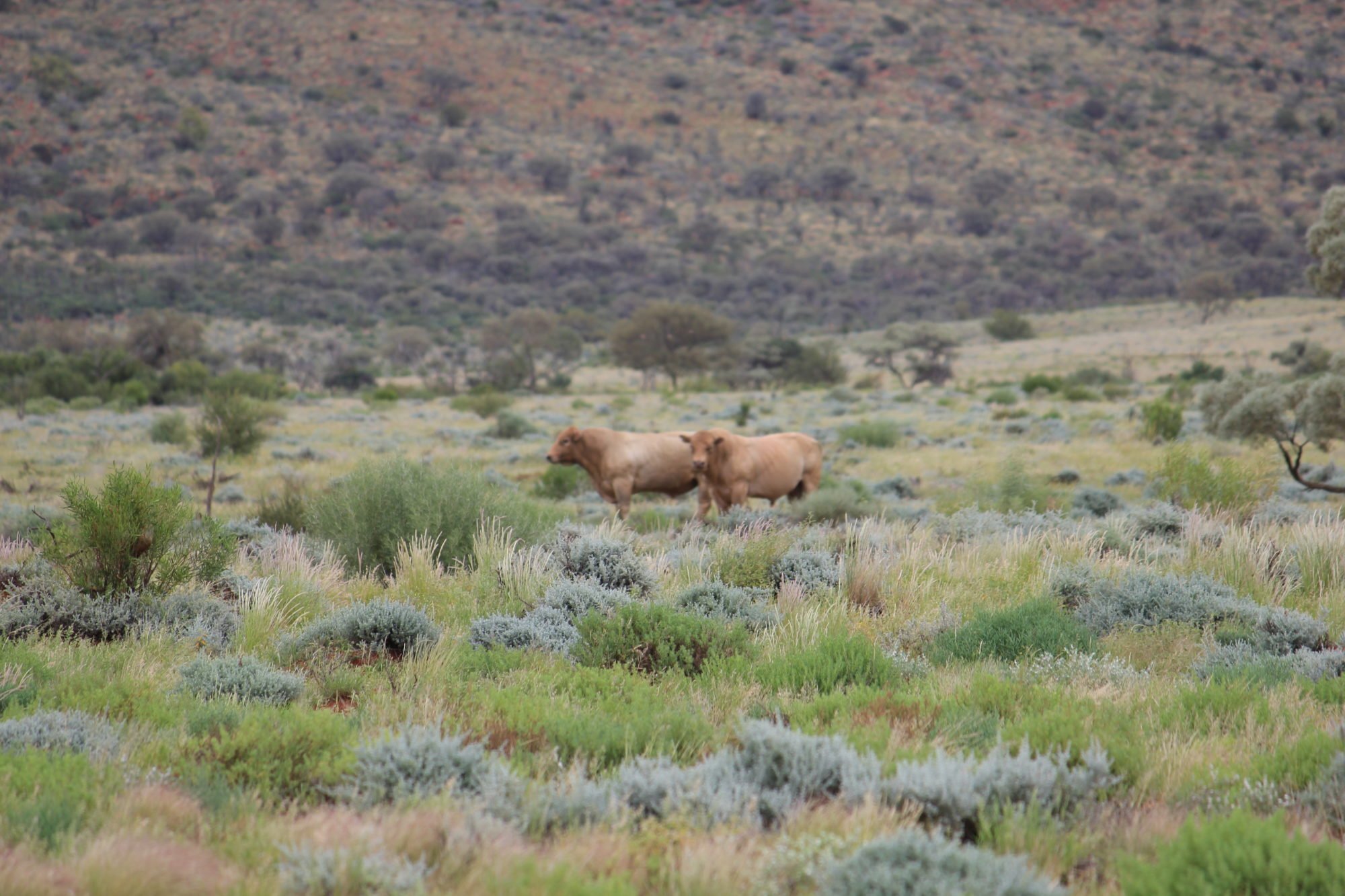
Murray Grey bulls.
We run British breed cattle (not Brahmans) with a composite herd serviced by Murray Grey bulls. The increasing core breeding herd of Murray Grey cows provides ongoing replacement heifers.
We sell predominantly straight to slaughter, but also into the feedlot market. We would love to have own Curtin Springs Beef available consistently for visitors, however the logistic of this are very difficult. Meat for commercial use/human consumption must be slaughtered in a licensed abattoir. Over 1500km away. A lot of food miles to get the animal there and the meat returned!
05 / Station country
Grass, scrub and sky.
Native grasses, Murray Greys and the weather that shapes everything we do. Select a photograph to enlarge it.
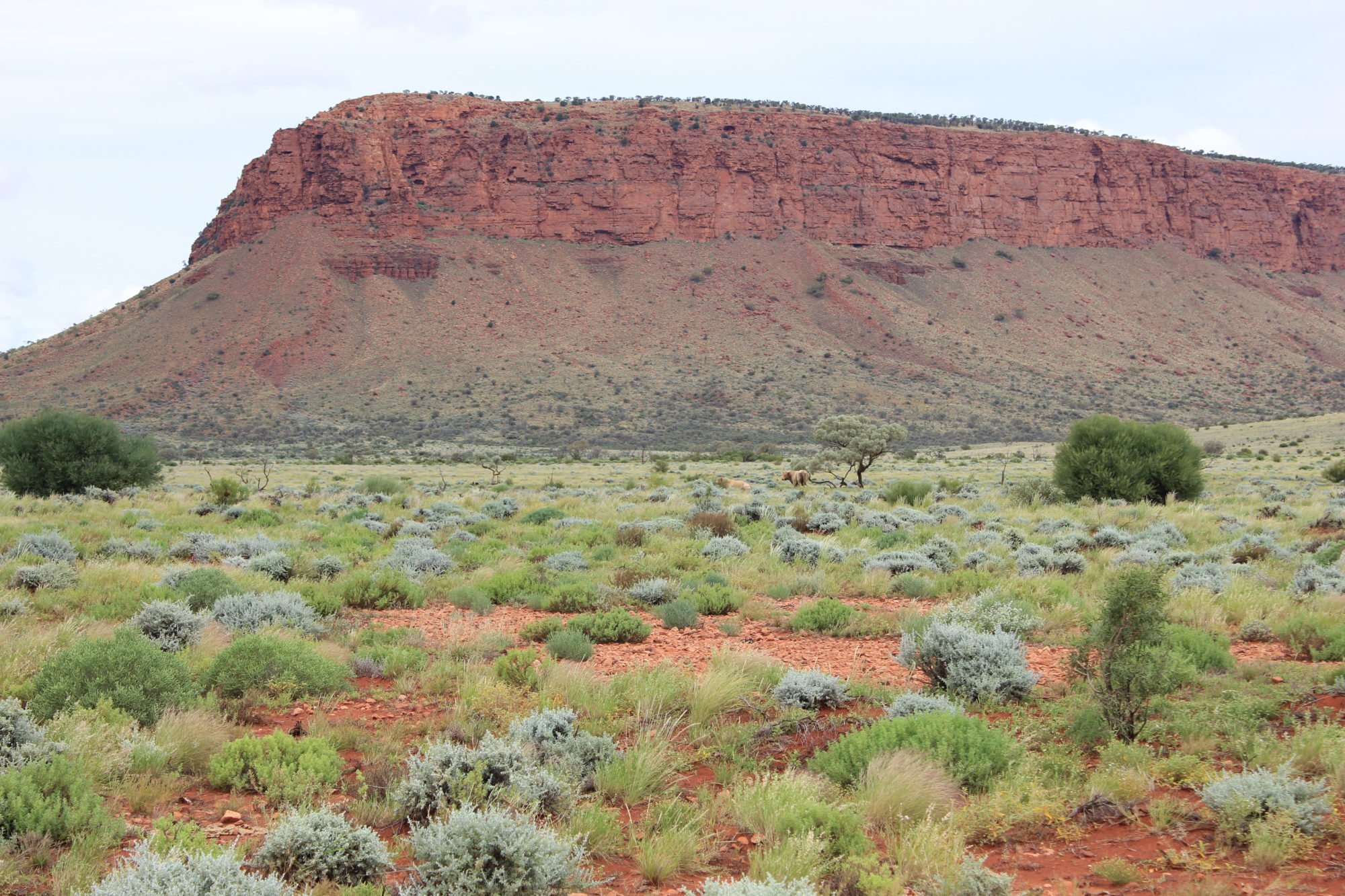
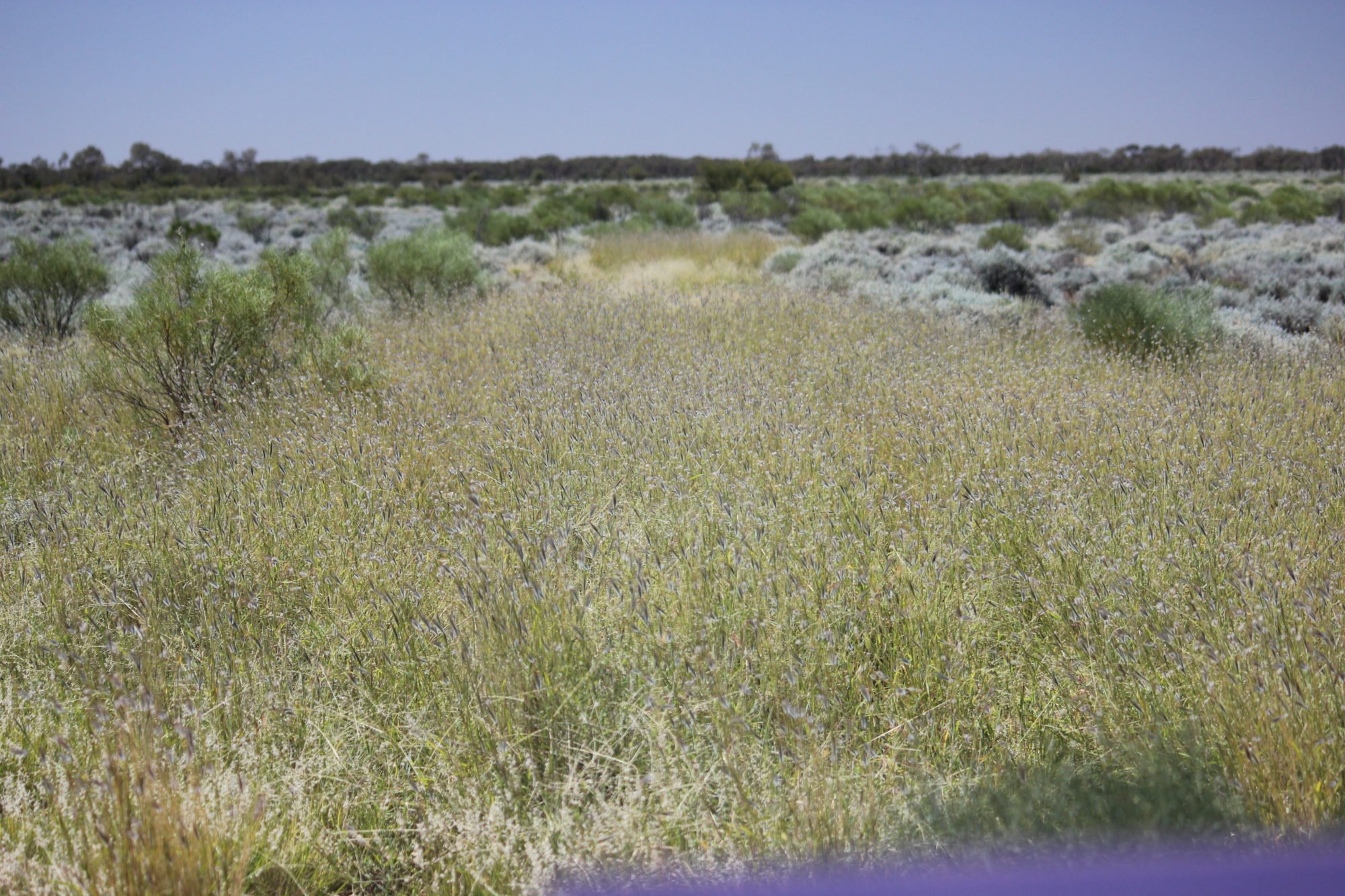
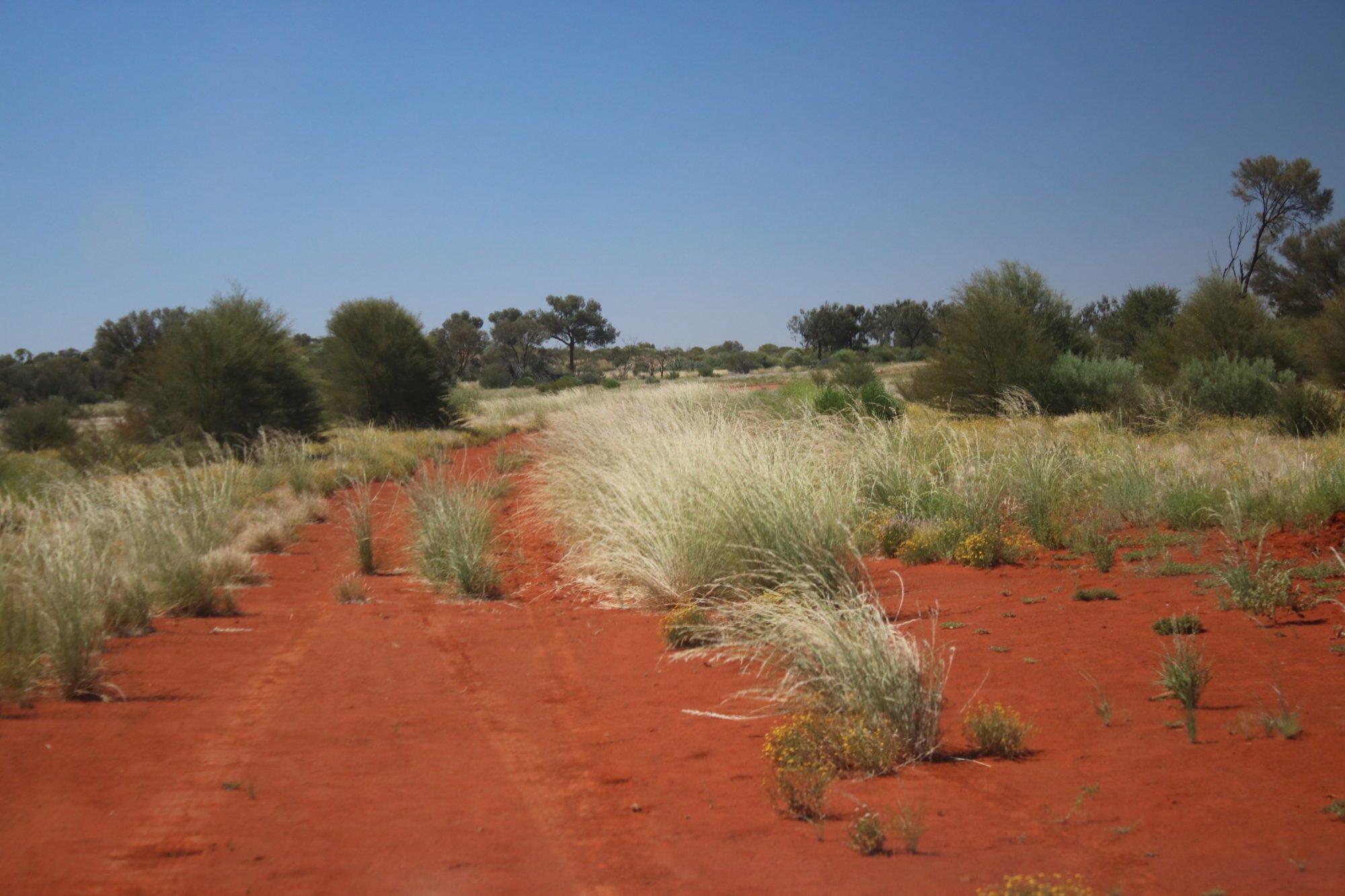
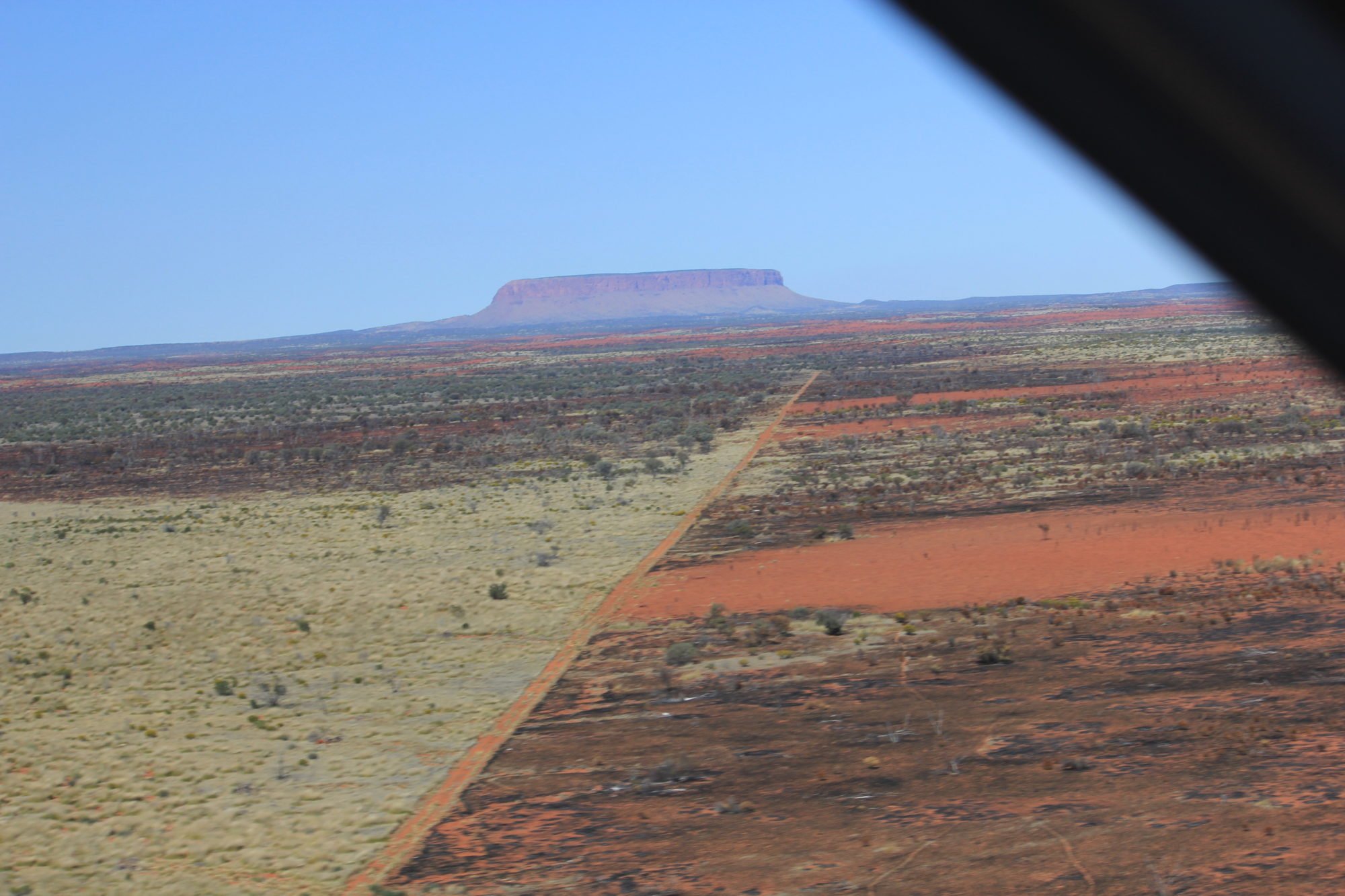
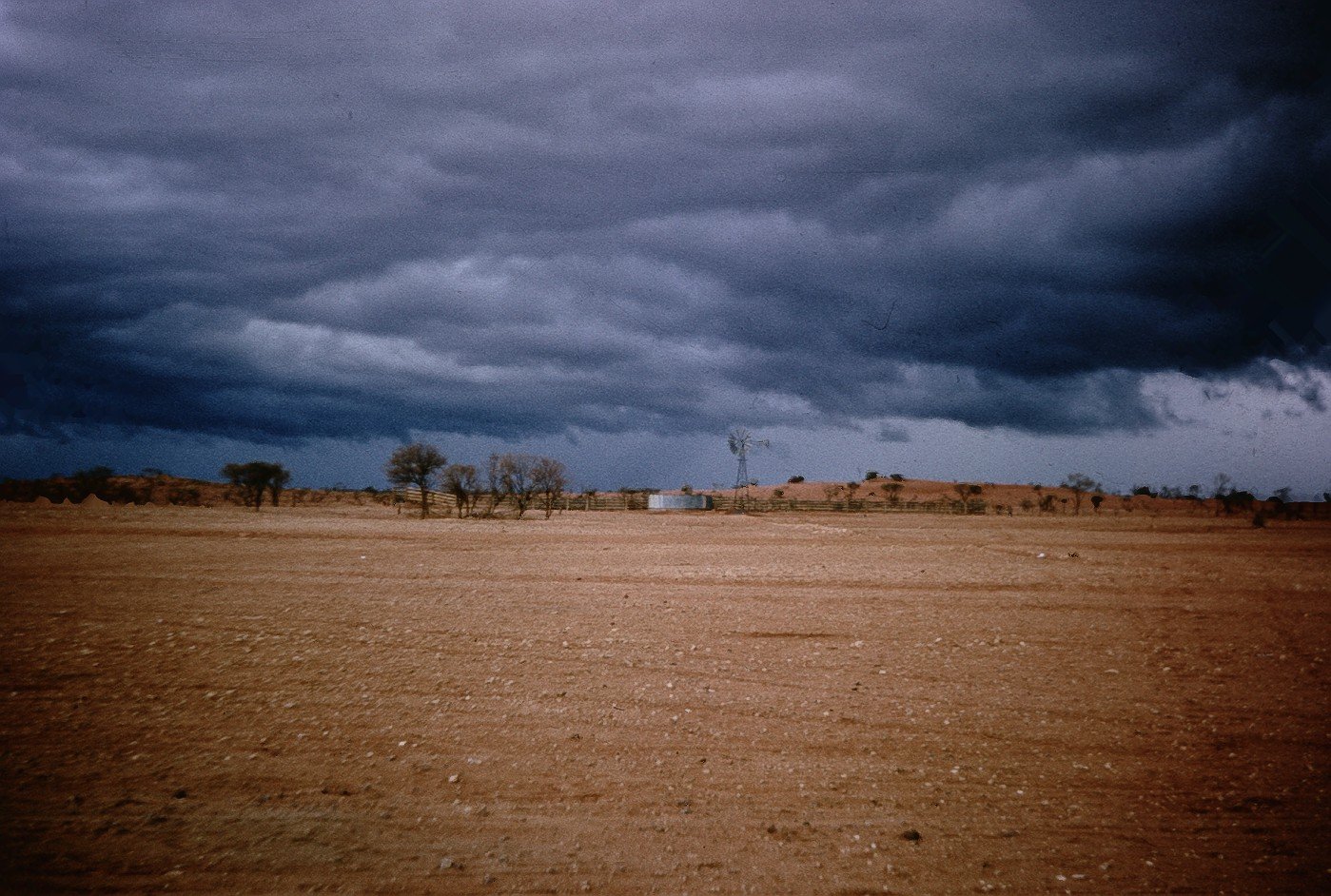
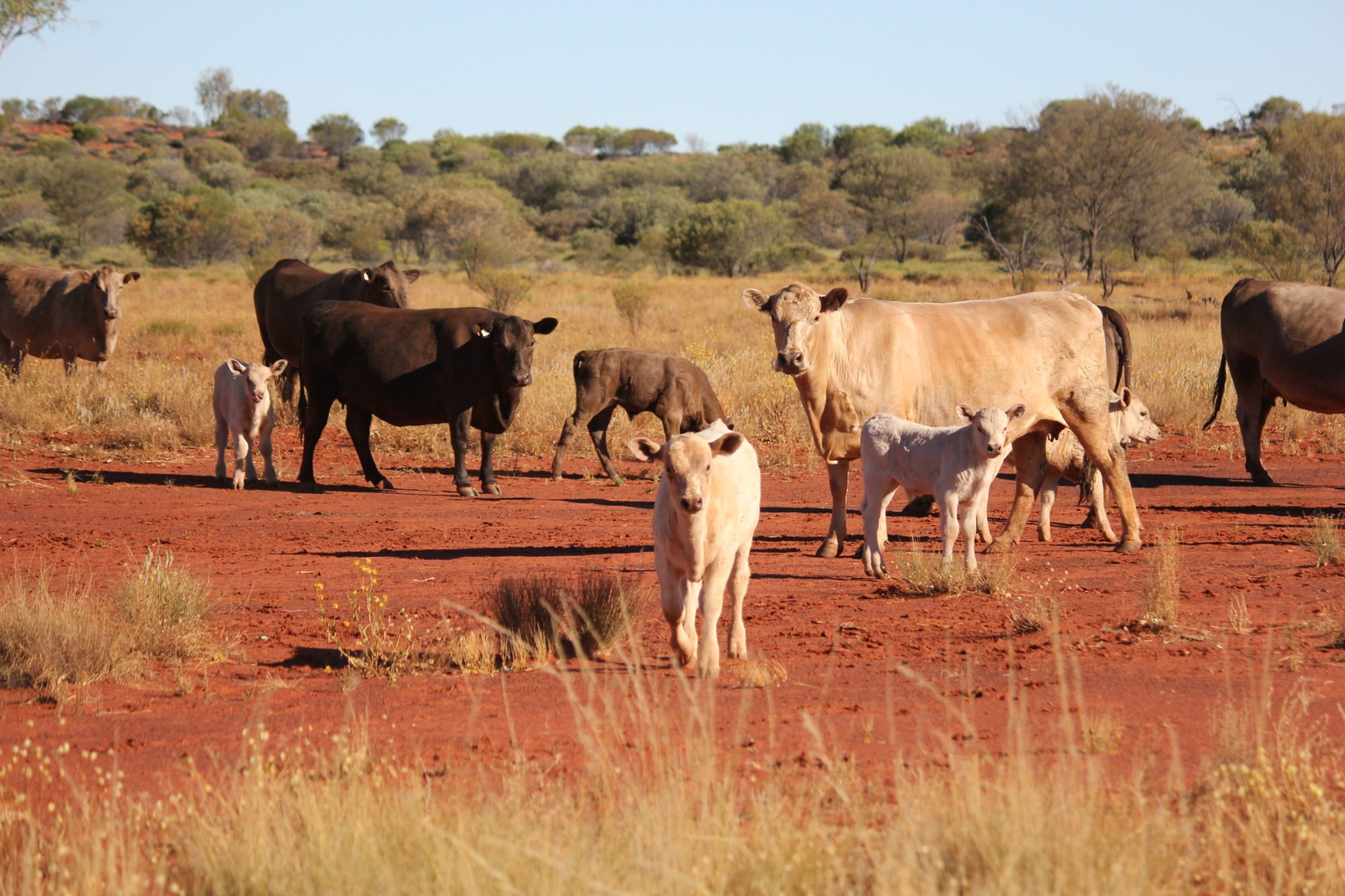
Photographs from the Curtin Springs archive. Select an image to enlarge and browse; no autoplay.
06 / Learn more
Out here, every season
tells a story.
Read about the challenges of running a station in Central Australia, or how it all began.